
This post may contain affiliate links. If you click on one of my affiliate links and make a purchase, I may receive a commission for referring you. This in no way affects your price. Please know that I only recommend resources and items I believe in and highly recommend. You can read my full disclosure statement here.
Have a pumpkin sitting on your porch? Bring it to the learning table!
A pumpkin gives children something real to touch, measure, investigate, and wonder about. How many seeds are hiding inside? Will it float? What would a tiny cart need to carry it?
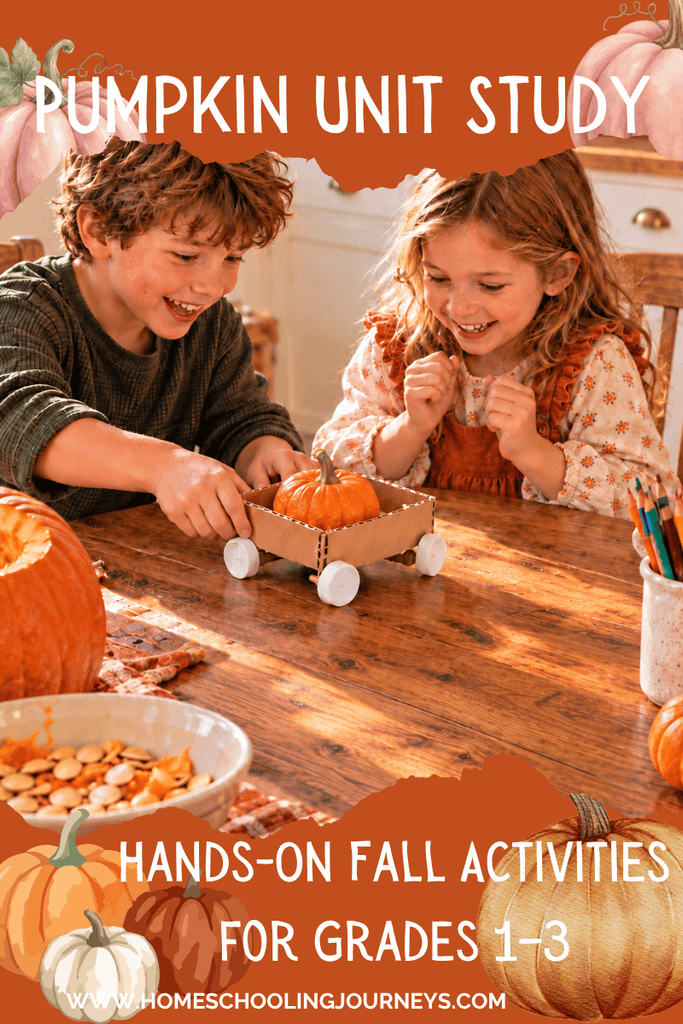
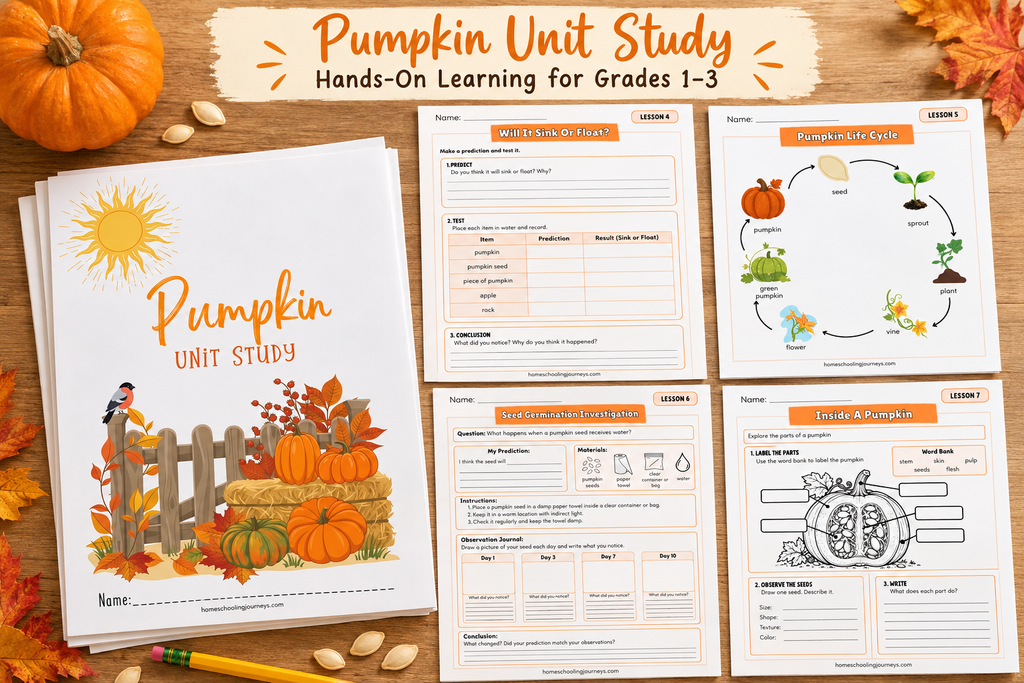
My Pumpkin Unit Study for Grades 1–3 brings those questions together through literacy, math, science, and creative challenges. It’s a way to enjoy seasonal learning with activities already planned for you.
Here’s a peek inside—and a few ways your family can learn together this fall.
Start With a Pumpkin and a Little Curiosity
Before cutting open your pumpkin, invite your child to take a closer look.
What do they notice about its shape? How does the skin feel? How heavy do they think it is?
The Pumpkin Investigation page helps children turn their observations into a math investigation. They estimate and measure height, width, circumference, and weight. They also count the pumpkin’s ribs and reflect on what surprised them.
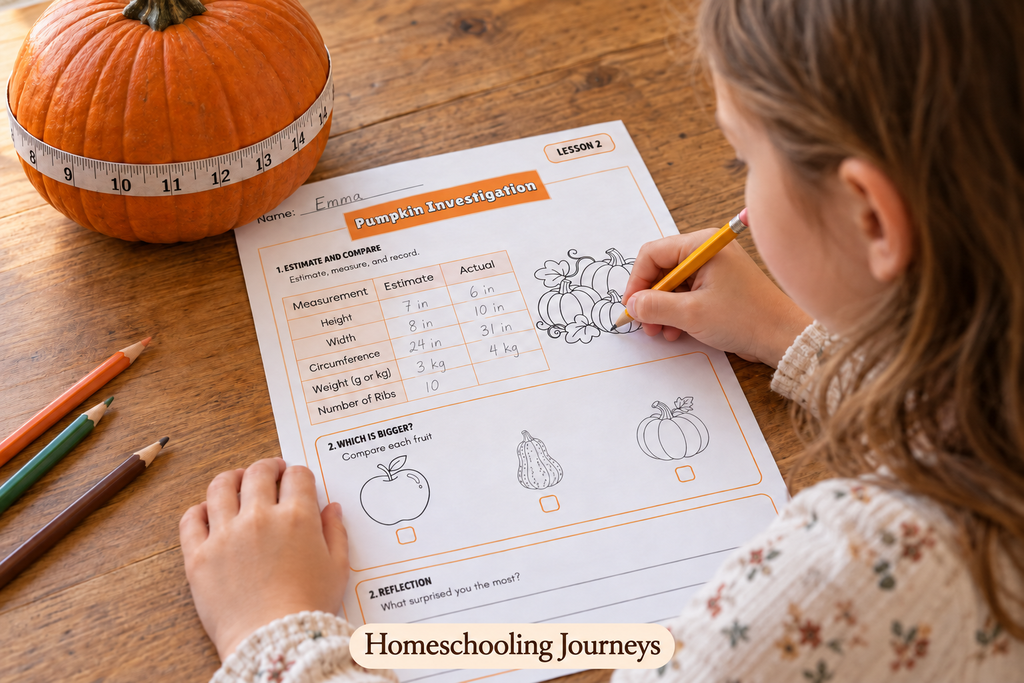
Estimate, measure, and compare using a real pumpkin.
This gives measurement a purpose. Your child isn’t simply reading numbers on a worksheet—they’re finding out whether their pumpkin is as tall, wide, or heavy as they imagined.
Younger children can share their thinking aloud while you record. Children ready for more independence can complete the measurements and compare their estimates with the results.
Turn Pumpkin Seeds Into Hands-On Math
Opening a pumpkin often brings the same excited question: “How many seeds are in there?”
The Great Pumpkin Seed Challenge turns that curiosity into counting, grouping, and place-value practice.
Children begin with an estimate. Then they organize the seeds into groups of ten and record their total using hundreds, tens, and ones.
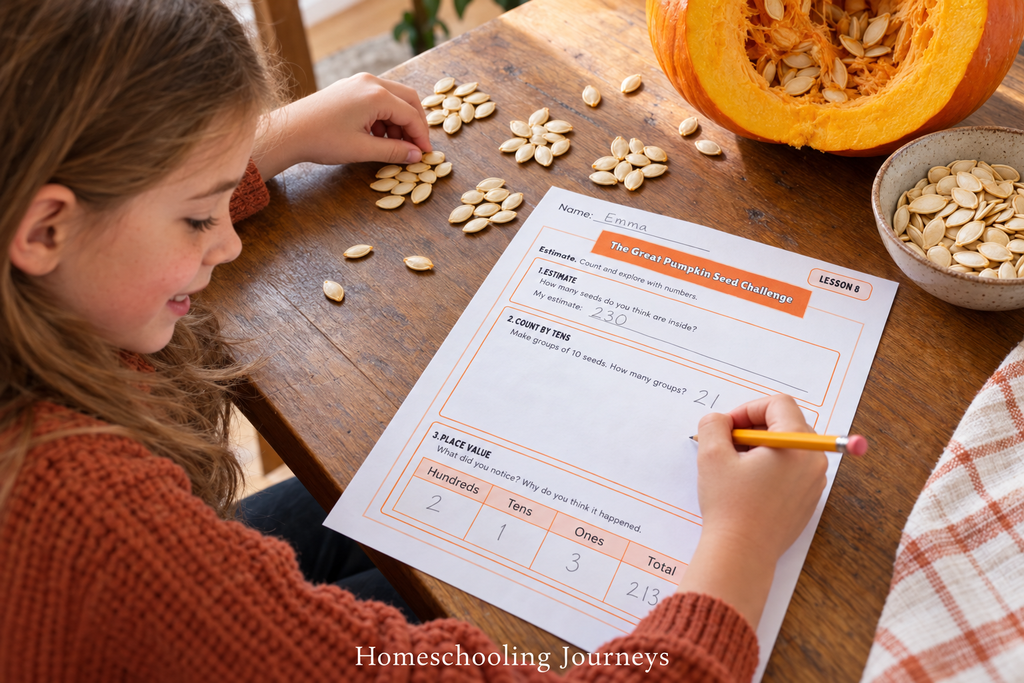
A scoop of pumpkin seeds becomes a chance to explore numbers.
The unit also includes a Seed Math page with addition, equal-row arrays, and a word problem.
You can choose the level that fits your child. One child might practise counting ten seeds at a time, while another uses seeds to build arrays and write multiplication sentences. Siblings can explore the same materials while working on different skills.
Build a Cart for the Pumpkin Harvest
Could your child build a little cart that carries a small pumpkin—or another lightweight object?
In The Farmer’s Cart STEM challenge, children draw a plan, build with recycled materials, and test their creation.
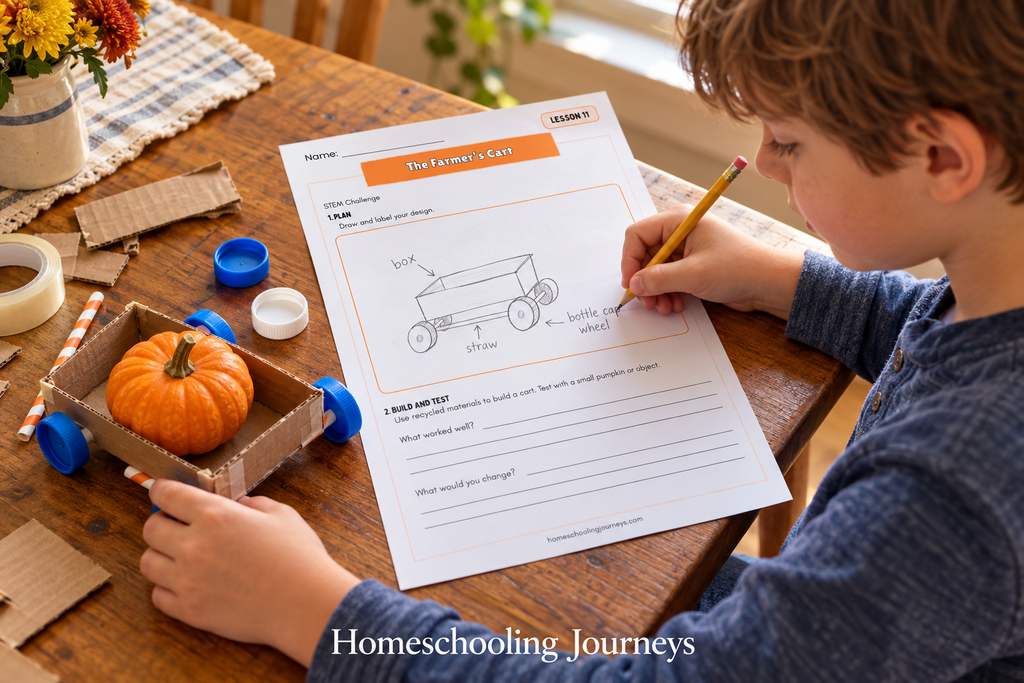
Plan, build, test, and think about what to change.
Cardboard, bottle caps, tape, and other simple materials become tools for solving a problem. Perhaps the wheels won’t turn. Maybe the cart tips when the load is added. Each test gives your child something to think about.
A follow-up page invites children to test their cart on a flat floor, carpet, and a ramp. They record what happened and reflect on how they solved a challenge.
The learning happens in the adjustments, conversations, and discoveries along the way.
There’s More to Explore Inside
These three activities are part of a 12-lesson pumpkin unit that connects several subjects through one seasonal theme.
The complete unit also includes:
- Poetry and word play: Read Five Little Pumpkins, explore rhyming words and syllables, and create a funny ending.
- Fruit or vegetable investigations: Compare foods and explore why pumpkins are classified botanically as fruits.
- Sink-or-float testing: Make predictions, test objects, and record what happens.
- Plant science: Explore the pumpkin life cycle, label pumpkin parts, and observe seed germination.
- Social studies: Locate North America and learn about pumpkins, Indigenous growing traditions, and their uses in different countries.
- Baking: Follow a pumpkin cupcake recipe while practising measuring and following directions.
The unit includes an overview, learning objectives, a materials list, assessment suggestions, and an answer-key section to support your teaching.
Make It Fit Your Homeschool
You don’t need to complete the whole unit in one sitting—or follow a rigid schedule.
Choose an activity for your morning learning time, spread the lessons across several days, or linger over a favourite investigation. Start the germination activity early so your child can check the seed while exploring other lessons.
There’s room for conversation, drawing, writing, and hands-on learning. You can help with recording when needed and invite more independent work when your child is ready.
My goal is to give you a clear starting point, with enough flexibility to follow your child’s curiosity.
Bring Pumpkin Learning to Your Table
If you’re looking for fall learning that connects subjects and gives children something meaningful to explore, this unit brings the ideas and recording pages together for you.
Gather a pumpkin, print the pages you need, and enjoy discovering what’s inside—both the pumpkin and your child’s imagination.
Leave a Reply