
This post may contain affiliate links. If you click on one of my affiliate links and make a purchase, I may receive a commission for referring you. This in no way affects your price. Please know that I only recommend resources and items I believe in and highly recommend. You can read my full disclosure statement here.

If you’ve been researching how to teach your child to read, you’ve probably come across the phrase “Science of Reading.”
It shows up everywhere, in schools, homeschool groups, podcasts, and online discussions.
But what does it actually mean?
More importantly, how does it help your child become a confident reader?
Let’s break it down in a way that actually makes sense.
What Is the Science of Reading? A Simple Guide for Homeschool Parents
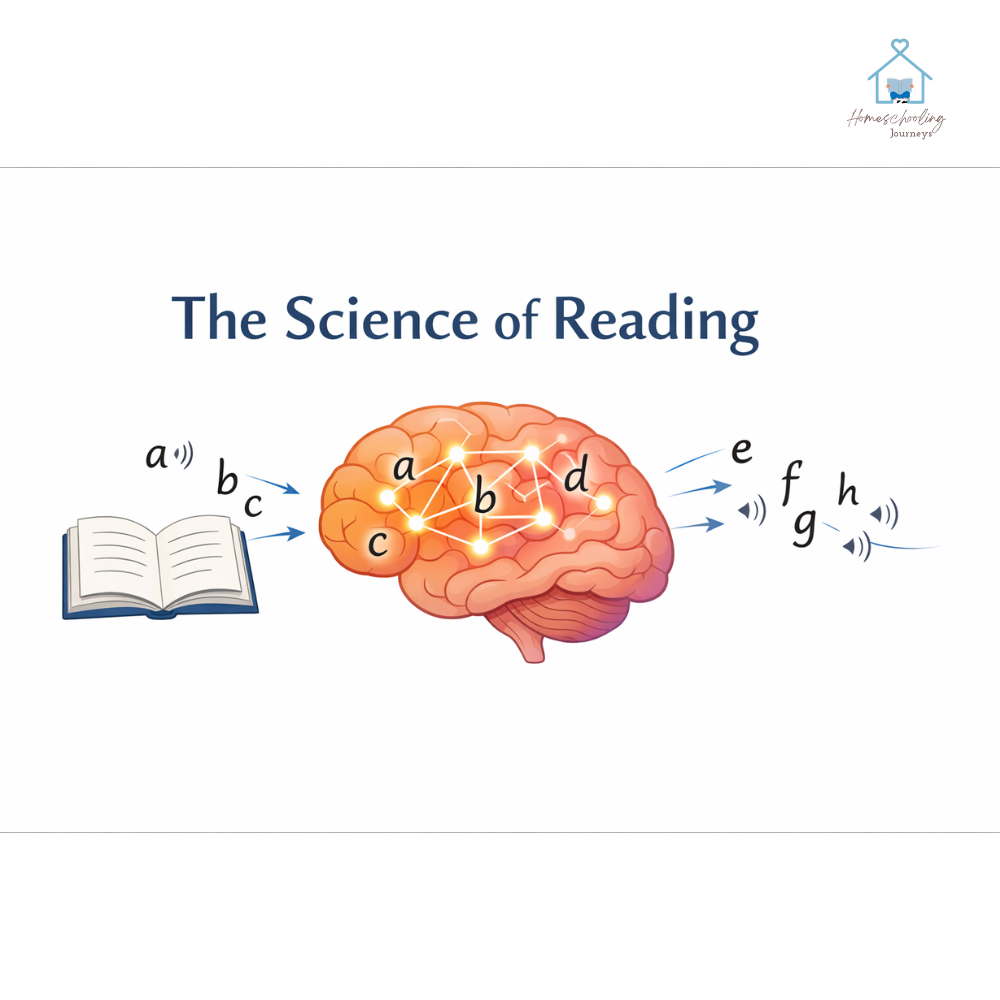
The Science of Reading refers to a large body of research that explains how the brain learns to read.
This research draws from several fields, including neuroscience, cognitive psychology, linguistics, and education. Together, these areas of study help researchers understand how children process written language and develop reading skills.
One of the most important findings from this research is that reading does not develop naturally in the same way that speaking does. Children learn to speak simply by being surrounded by language, but reading is different. It must be taught through clear and systematic instruction.
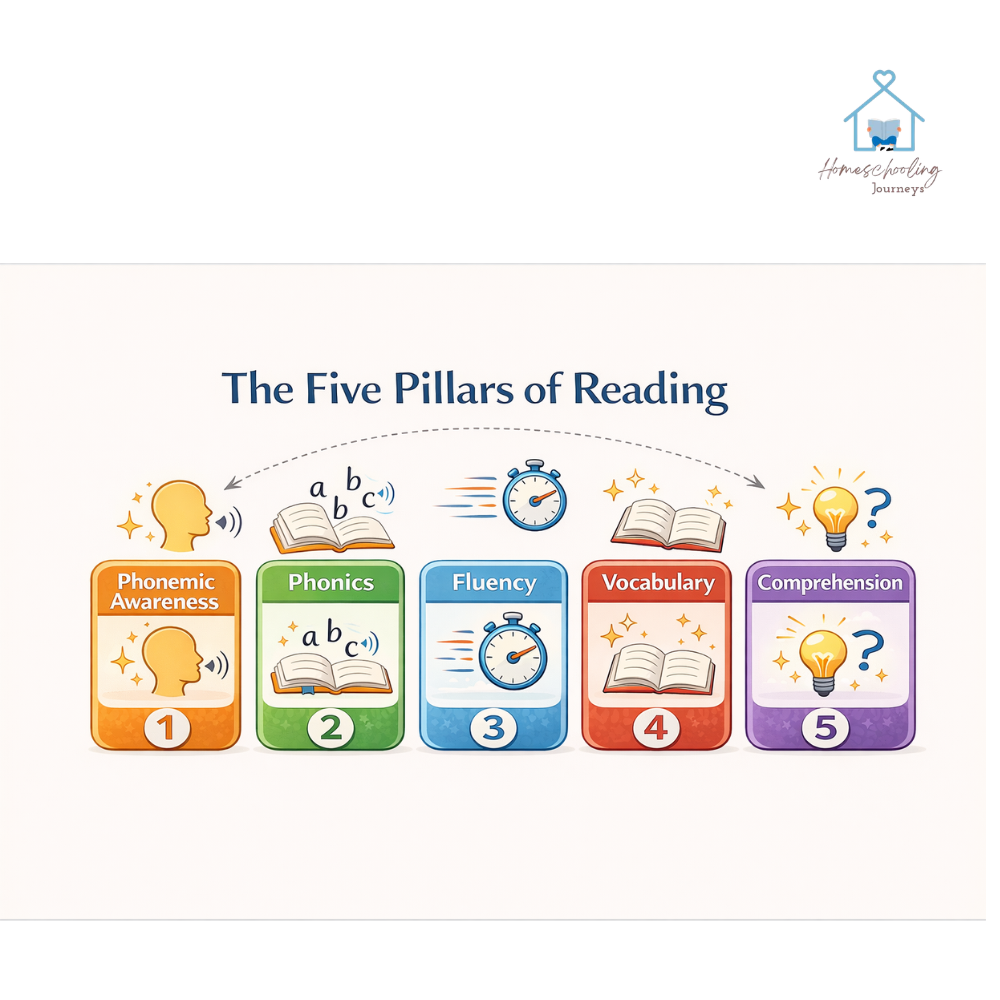
Research consistently shows that strong readers develop when instruction focuses on several key skills:
- phonemic awareness
- phonics
- reading fluency
- vocabulary
- comprehension
These areas are commonly known as the Five Pillars of Reading, and they form the foundation of effective reading instruction.
Why the Science of Reading Matters
For many years, reading instruction often encouraged kids to guess words using pictures or context clues.
However, research now clearly shows that strong readers rely on something different: decoding.
When children understand how letters represent sounds, they can sound out unfamiliar words independently. This ability gives them the tools they need to read new words instead of guessing them.
Because of this, the Science of Reading emphasizes:
- Explicit phonics instruction
- A clear progression of skills
- Regular decoding practice
- Opportunities to read connected text
Instead of memorizing words, children learn how the reading system actually works.
How Children Learn to Read (According to Science)
Children learn to read by connecting letters with sounds and practicing how those sounds blend together to form words.
At first, reading often sounds slow and choppy because children are working through each sound one at a time. This stage is completely normal.
With practice, the brain begins to recognize those words more quickly. Words that once had to be sounded out gradually become easier to read.
This is how children move from slow sounding out to smooth, fluent reading.
This progress happens most effectively when children have:
- Clear phonics instruction
- Opportunities to practice sounding out words
- Regular time to read simple text they can decode
What Science of Reading Instruction Looks Like
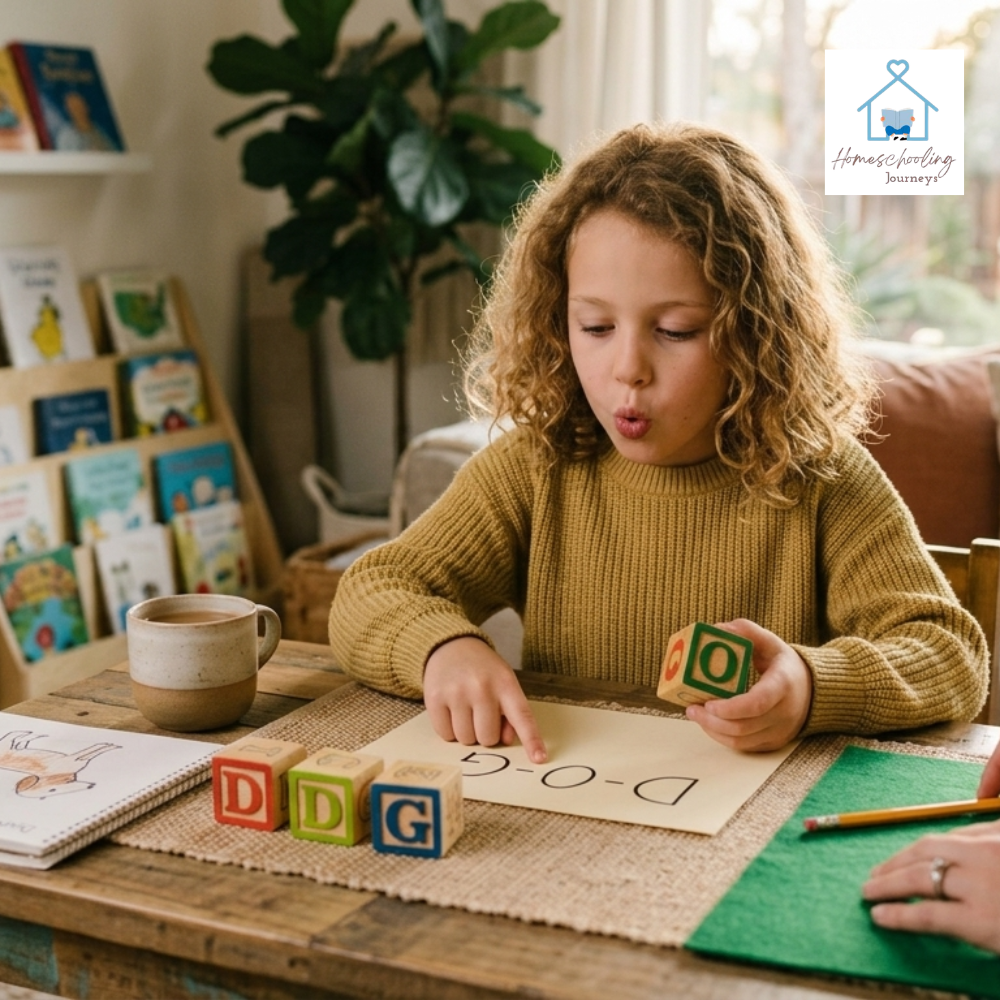
In a Science of Reading approach, lessons are usually short, structured, and focused.
Rather than overwhelming children with long lessons, many effective reading routines follow a simple structure.
1. Sound Awareness
Children practice hearing and blending sounds.
2. Target Phonics Skill
One phonics pattern is introduced and practiced.
3. Decodable Reading
Children read short passages that include the phonics pattern they just learned.
4. Confidence Building
Lessons end with success and encouragement.
This type of routine helps children build reading skills step by step while developing confidence.
A simple daily lesson might include:
- Reviewing letter sounds
- Blending simple words
- Practicing one phonics pattern
- Reading a short decodable passage
Over time, these small steps help children develop the skills needed for fluent reading.
A Simple Science of Reading Routine (For Homeschool Parents)
Many homeschool parents worry that they are not doing enough or that they may not be teaching reading the “right way.”
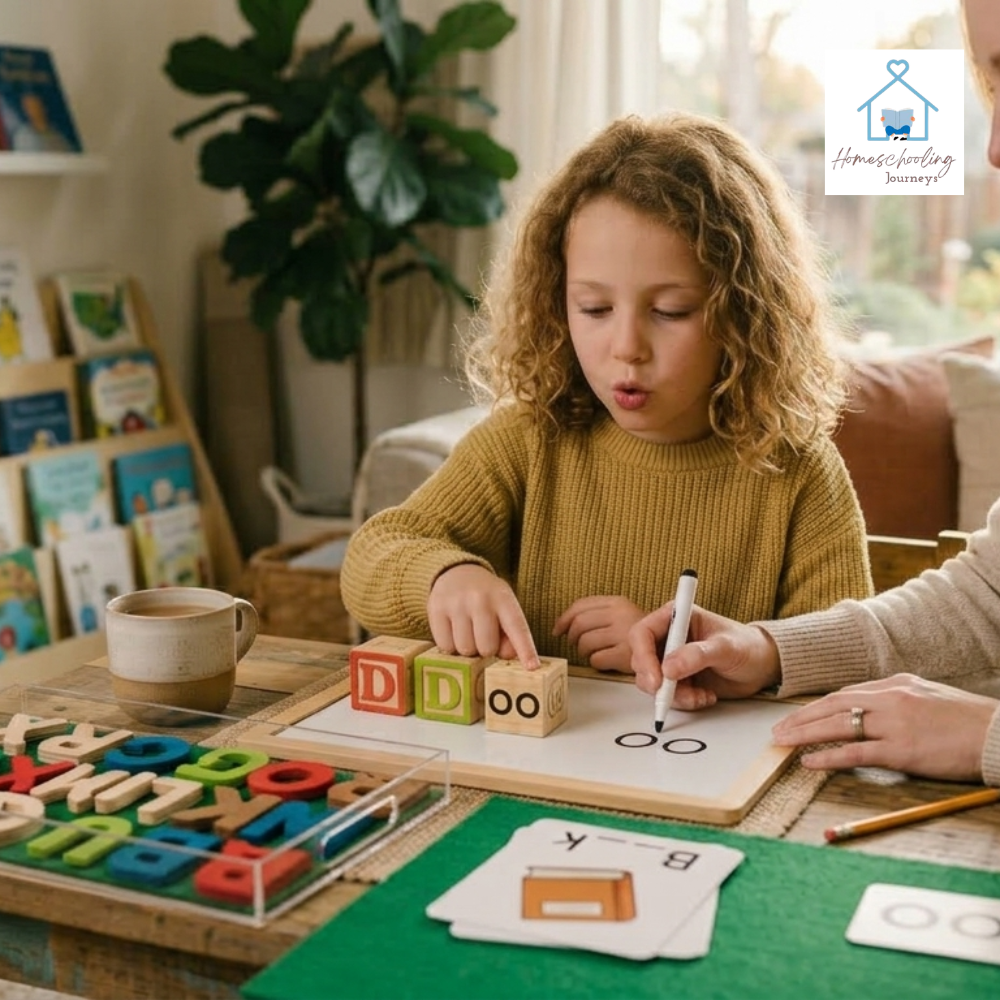
The truth is that reading instruction does not have to be complicated. A short, consistent routine can make a significant difference.
For example, a 10–15 minute daily routine might include:
- Reviewing letter sounds
- Practicing one phonics pattern
- Reading a short decodable passage
- Ending the lesson on a positive note
Small, consistent practice builds strong reading skills over time.
Children don’t need hours of instruction each day. What they need most is clear teaching and regular practice.
Free Science of Reading Routine for Homeschool Parents
If you would like a simple routine you can follow each day, I created a free Early Reader Routine guide for homeschool families.
Inside the guide you’ll find:
- A 10–15 minute daily reading plan
- Step-by-step phonics practice
- Blending activities
- Decodable reading guidance
- Encouragement tips for parents
The routine is designed to make reading instruction feel calm, structured, and manageable. Early Reader Routine
You can download it here:
👉 [Insert Freebie Link]
Signs Your Child Is Learning to Read the Right Way
When reading instruction follows the Science of Reading, parents often notice changes such as:
- Less guessing at words
- Stronger sounding-out skills
- Smoother reading over time
- Growing confidence
At first, reading may sound slow. That’s actually part of the learning process.
Slow decoding is what eventually leads to fluent reading.
The Biggest Misconception About Learning to Read
Many parents believe that struggling readers simply need more practice with books.
But in many cases, reading struggles happen because foundational skills are missing.
When children learn:
- Phonemic awareness
- Phonics patterns
- Decoding strategies
Reading begins to make sense.
Once the brain understands how letters and sounds work together, reading becomes much easier.
Teaching your child to read can sometimes feel overwhelming, especially with so much conflicting advice online.
The Science of Reading offers something incredibly helpful: clarity.
It shows us that reading success comes from structured instruction, repetition, and encouragement.
Small daily steps may seem simple, but over time they build the foundation for confident, capable readers.
Leave a Reply