
This post may contain affiliate links. If you click on one of my affiliate links and make a purchase, I may receive a commission for referring you. This in no way affects your price. Please know that I only recommend resources and items I believe in and highly recommend. You can read my full disclosure statement here.
Balancing homeschooling, work, and personal life can feel like juggling flaming torches while walking a tightrope—exciting but undeniably challenging. As a homeschool mom, you wear many hats: educator, planner, caregiver, and sometimes, employee. Finding harmony among these roles requires intentional time management and organizational skills. Here are some practical strategies to help you balance homeschooling with work and personal life.

Create a Detailed Schedule
A well-structured schedule is the backbone of effective time management. Start by mapping out your week, allocating time blocks for homeschooling, work, and personal activities. Consider using a digital calendar or planner to keep track of your commitments and deadlines. Include buffer times between activities to accommodate any unexpected changes or delays.
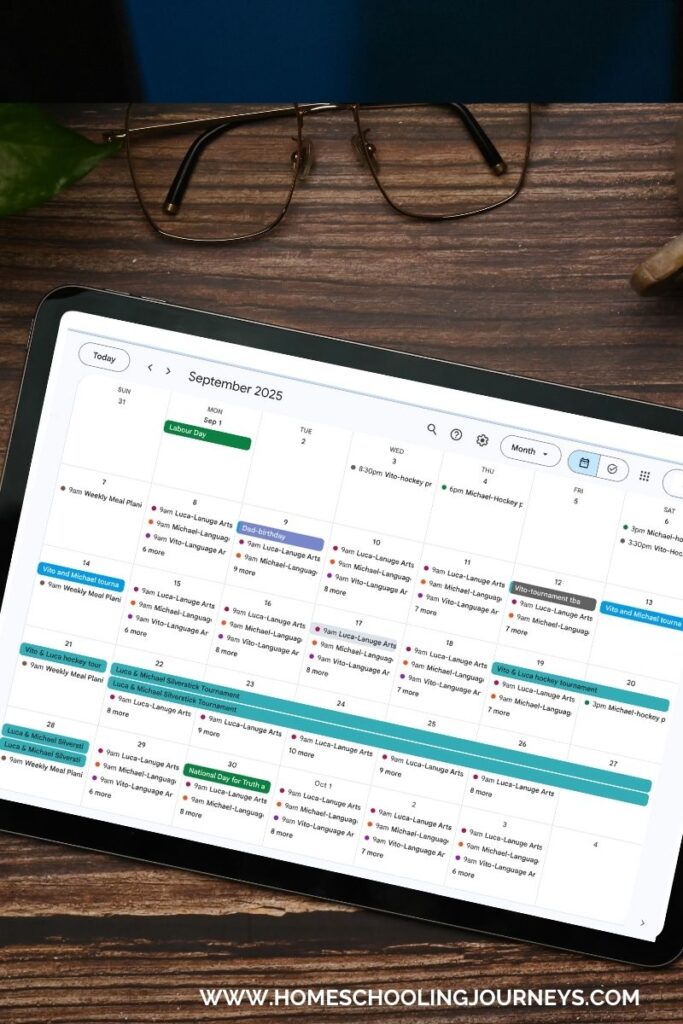
Tip: Utilize color coding to differentiate between homeschooling, work, and personal tasks. This visual aid can help you quickly see where your time is allocated and where adjustments might be needed.
Establish a Consistent Routine
Routine provides structure and predictability, which can be especially helpful in a homeschooling environment. Establish a daily routine with dedicated blocks for academic activities, work hours, and personal time. Consistency helps children understand what to expect and can make transitions smoother.

Tip: Start your day with a morning routine that includes personal time and preparation for homeschooling. A consistent start can set a positive tone for the entire day.
Set Clear Boundaries
Balancing homeschooling and work requires setting clear boundaries to ensure that neither area encroaches on the other. Create specific work hours and stick to them as you would in a traditional job setting. Similarly, designate specific times for homeschooling and personal activities. Communicate these boundaries to your family to foster mutual respect and understanding.

Tip: Use visual cues, such as a “work in progress” sign, when you need uninterrupted work time or specific areas of your home dedicated to work and homeschooling.
Prioritize Tasks with a To-Do List
To stay organized and focused, create a daily or weekly to-do list. Prioritize tasks based on importance and deadlines. Break larger tasks into smaller, manageable steps and tackle them individually. This approach helps prevent feeling overwhelmed and ensures critical tasks are completed efficiently.
Tip: Incorporate a mix of high-priority and low-priority tasks in your daily list to maintain momentum and achieve a sense of accomplishment throughout the day.
Delegate and Outsource When Possible
Don’t be afraid to delegate tasks or seek help when needed. This could involve asking your partner to take on specific responsibilities, involving your children in household chores, or outsourcing tasks, such as cleaning or administrative work. Delegating helps reduce your load and allows you to focus on high-priority areas.

Tip: Identify tasks that can be outsourced or delegated and create a plan for implementing them. For example, you might use a meal delivery service to simplify meal planning or hire a tutor for subjects outside your expertise.
Incorporate Flexibility
While structure is important, flexibility is equally crucial. Life is unpredictable, and unexpected events will occur. Build flexibility into your schedule to accommodate changes without derailing your entire plan. This might mean adjusting your homeschool hours, shifting work tasks, or rescheduling personal activities.
Tip: Develop a “Plan B” for critical tasks and activities so that you have a backup plan if things don’t go as expected.
Utilize Time Blocks
Time blocking is a technique for allocating specific blocks of time to different activities. This approach helps you focus on one task at a time and prevents multitasking, which can lead to inefficiencies. For example, set aside a block in the morning for homeschooling, a block in the afternoon for work, and an evening block for personal activities or family time.
Tip: Use a timer to stay on track with each time block and ensure you adhere to your planned schedule.
Practice Self-Care
Self-care is vital for maintaining balance and preventing burnout. Schedule regular breaks and personal time to recharge. Engage in activities that bring you joy and relaxation, whether a hobby, exercise, or simply a quiet moment to yourself.

Tip: Incorporate short breaks throughout your day to stretch, meditate, or take a brief walk. Even small moments of self-care can make a big difference in your overall well-being.
Reflect and Adjust Regularly
Regularly assess how your time management strategies are working and make adjustments as needed. Reflect on what’s working well and where improvements can be made. Be open to tweaking your schedule and plan to better fit your evolving needs and priorities.
Tip: Set aside time at the end of each week to review your accomplishments, identify any challenges, and plan for the upcoming week. This reflection helps you stay on track and continuously improve your time management skills.
Seek Support and Community
Connecting with other homeschooled families can provide valuable support and insight. Join online forums, local homeschooling groups, or social media communities to share experiences, seek advice, and gain encouragement.

Tip: Participate in group discussions and events to build a support network offering practical tips and emotional support.
Implementing these strategies can create a balanced approach to managing homeschooling, work, and personal life. Remember that finding the right balance is an ongoing process that may require adjustments.
Leave a Reply