
This post may contain affiliate links. If you click on one of my affiliate links and make a purchase, I may receive a commission for referring you. This in no way affects your price. Please know that I only recommend resources and items I believe in and highly recommend. You can read my full disclosure statement here.
Organizing your homeschool day can make a difference in how smoothly things run and how productive you and your children are. A well-structured day helps ensure that learning is effective, balanced, and enjoyable. Whether you’re just starting or looking to refine your routine, here are some practical tips to help you organize your homeschool day for success.
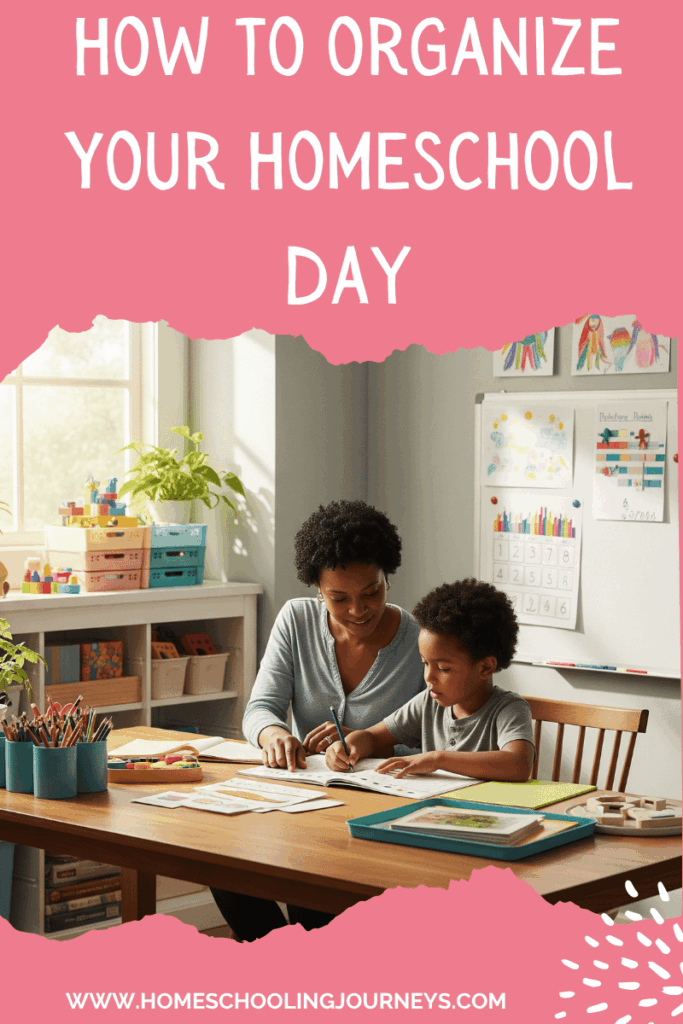
Start with a Plan
The foundation of a successful homeschool day is a well-thought-out plan. Here’s how to get started.
Set Clear Goals
Determine what you want to achieve each day. Set academic and personal goals for your children, including time for breaks and extracurricular activities.

Create a Daily Schedule
Outline a schedule that includes all the subjects, activities, and routines you want to cover. A visual schedule can be particularly helpful for younger children.
Be Flexible
While having a plan is crucial, it’s also important to remain flexible. Be prepared to adjust the schedule based on your child’s needs and any unexpected events.
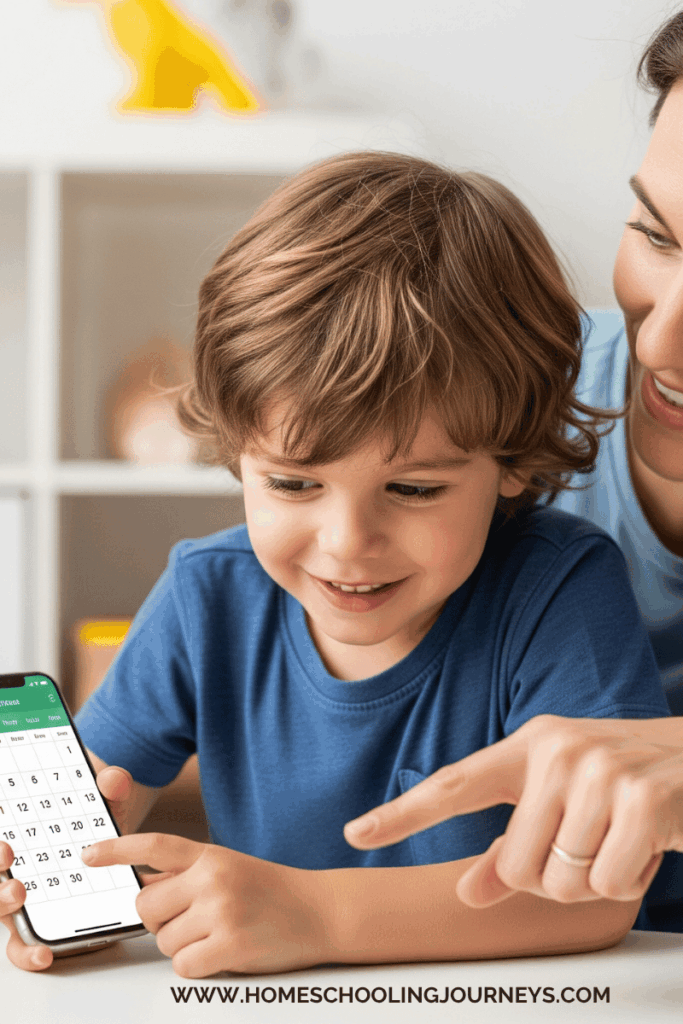
Establish a Routine
Consistency is key to a smooth homeschool day. Establishing a routine helps create a sense of stability and predictability for your children.
Morning Routine
Start the day with a consistent morning routine. This might include breakfast, personal hygiene, and a brief review of the day’s agenda.
Subject Blocks
Break the day into blocks dedicated to different subjects or activities. For example, you might have a block for math in the morning, followed by language arts, science, or social studies.

Breaks and Physical Activity
Incorporate regular breaks and physical activity into the schedule. Short breaks can help your children stay focused, while physical activity keeps them energized and engaged.

Wrap-Up Routine
End the day with a consistent wrap-up routine. This might include reviewing what was learned, organizing materials, and setting goals for the next day.
Create a Learning Environment
A well-organized learning environment supports an efficient and effective homeschool day.
Designate a Learning Space
Set up a dedicated area free from distractions for homeschooling. This could be a separate room or a specific corner of your home.
Organize Supplies
Keep educational materials, books, and supplies organized and within reach by neatly storing them in bins, shelves, or drawers.
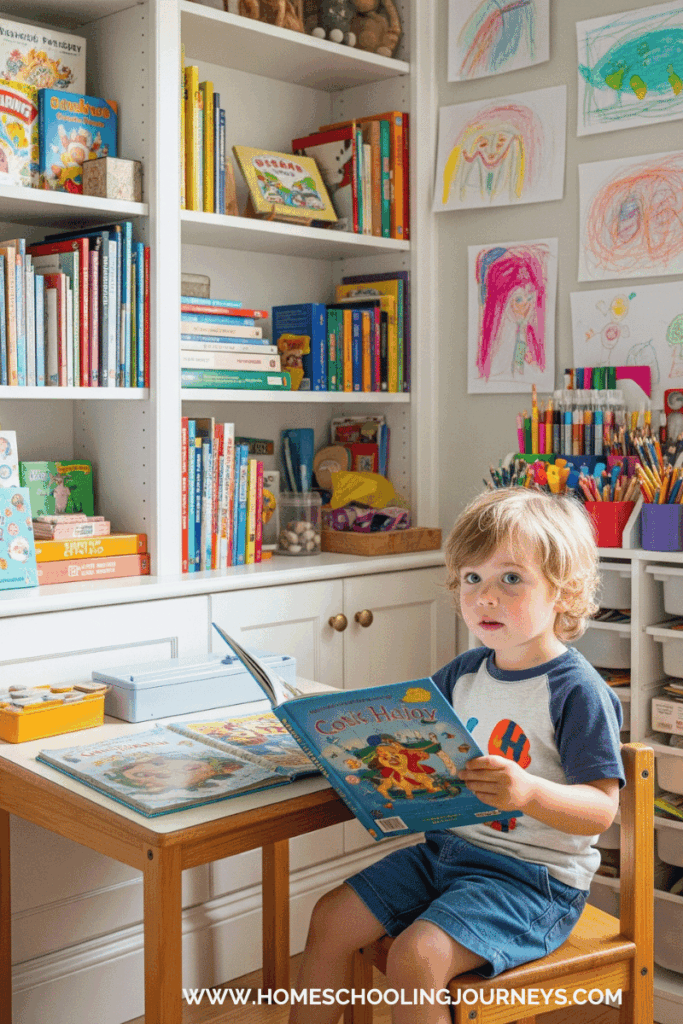
Personalize the Space
Make the learning space inviting and comfortable. Add educational posters, your child’s artwork, or a cozy reading nook to make it feel like their special learning area.
Use Time Management Tools
Effective time management tools can help you stay on track and maximize your homeschool day.
Timers and Alarms
Use timers to track how long you spend on each subject or activity. This helps maintain focus and prevents one subject from taking too much time.
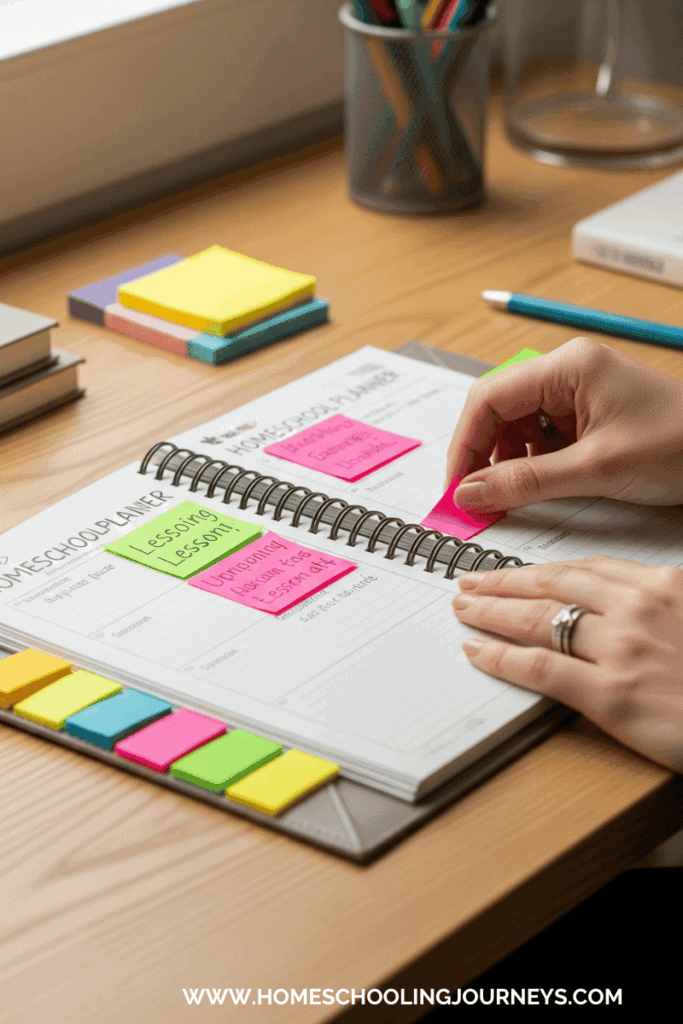
Planners and Calendars
Use a planner or calendar to plan the week’s lessons and activities. Digital planners or apps can be particularly useful for making easy adjustments and reminders.
To-Do Lists
Create daily or weekly to-do lists for both you and your children. This helps keep track of assignments and ensures that nothing is overlooked.
Incorporate Variety and Flexibility
Variety keeps learning fresh and engaging, while flexibility ensures that the schedule can adapt to your family’s needs.

Mix Up Activities
Alternate between different types of activities to keep your children engaged. Combine hands-on projects, reading, writing, and discussions for a well-rounded experience.
Adjust as Needed
Be open to adjusting the schedule based on your child’s interests, energy levels, and learning pace. Some days might require more time for certain subjects or activities.
Review and Reflect
Regular review and reflection help improve the organization of your homeschool day.

Weekly Reviews
At the end of each week, review what worked well and what could be improved. Adjust the schedule or routines based on these reflections.
Involve Your Children
Get feedback from your children about what they enjoy and find challenging. This will help you tailor the schedule to better meet their needs.
Maintain a Positive Attitude
A positive attitude sets the tone for the entire homeschool day.

Encourage and Motivate
Celebrate successes, no matter how small, and encourage when needed. Positive reinforcement helps keep your children motivated and engaged.
Stay Calm and Patient
Homeschooling can be challenging, and there will be days that don’t go as planned. Approach these moments with patience and flexibility, and remember that every day is a new opportunity to learn and grow.
Organizing your homeschool day effectively creates a productive and enjoyable learning experience. By setting clear goals, establishing routines, creating an organized learning environment, and incorporating variety, you can help your children thrive in their educational journey. Flexibility and a positive attitude are key to adapting and making the most of each day.
Leave a Reply