
This post may contain affiliate links. If you click on one of my affiliate links and make a purchase, I may receive a commission for referring you. This in no way affects your price. Please know that I only recommend resources and items I believe in and highly recommend. You can read my full disclosure statement here.
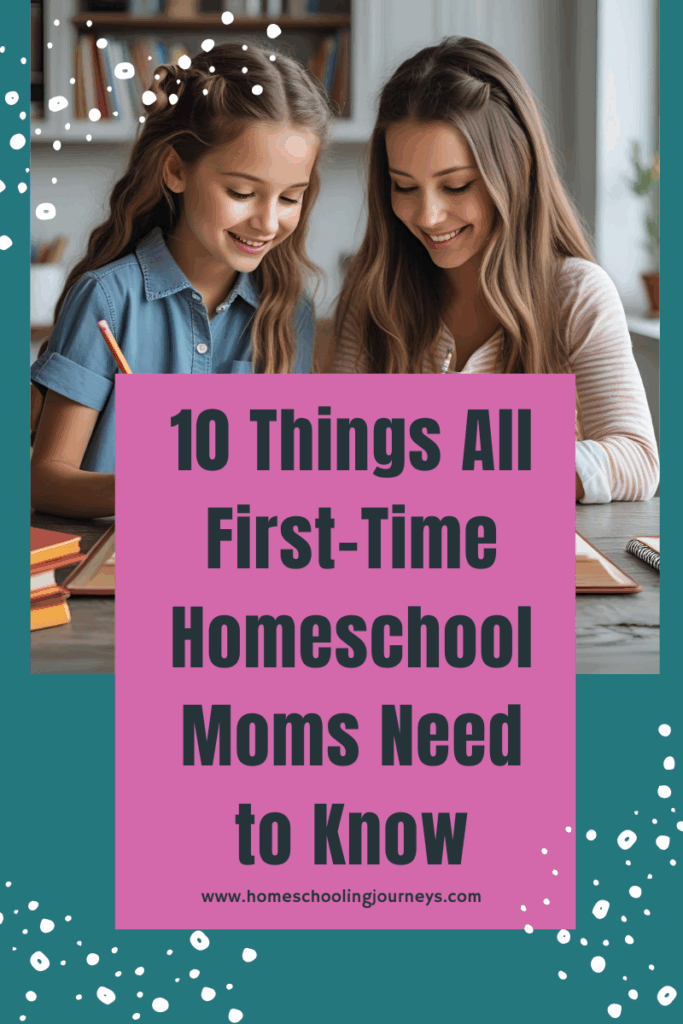
Embarking on the homeschooling journey can be both exciting and daunting for first-time homeschool moms. As you prepare to educate your children at home, you must equip yourself with knowledge and strategies to support your success and confidence. Here are ten essential things every first-time homeschool mom should know.
1. Understand Your State’s Homeschooling Laws
Before you begin homeschooling, familiarize yourself with your state or country’s homeschooling laws and regulations. Requirements vary, so research thoroughly to ensure you comply with legal obligations regarding curriculum, reporting, testing, and record-keeping.
2. Establish Clear Goals and Priorities
Define your reasons for homeschooling and set clear goals for your children’s education. Consider academic, social, and personal development objectives that align with your family values and aspirations. Having well-defined priorities guides your curriculum choices and daily activities.
3. Choose a Homeschooling Approach that Fits Your Family
Explore different homeschooling methods such as traditional, eclectic, Charlotte Mason, Montessori, or unschooling. Select an approach that resonates with your teaching style, children’s learning preferences, and family’s lifestyle. Flexibility allows you to adapt methods as you discover what works best for your family.
4. Customize Curriculum to Meet Individual Needs
Tailor your curriculum to meet each child’s unique learning styles and interests. To create a stimulating and engaging learning environment, incorporate diverse resources, including textbooks, online courses, educational games, and hands-on activities. Adapt lessons to accommodate varying academic strengths and challenges.
5. Embrace Flexibility and Adjust Expectations
Homeschooling offers the flexibility to tailor education to your child’s pace and interests. Embrace the freedom to adjust schedules, curriculum choices, and teaching strategies as needed. Remain adaptable and open-minded, understanding that learning occurs at different speeds and through diverse methods.
6. Connect with Local Homeschooling Community
Seek support and camaraderie by connecting with local homeschooling groups, co-ops, and organizations. Attend meetings, workshops, and social events to exchange ideas, resources, and encouragement with fellow homeschooling families. Building a community provides valuable support and enriches your homeschooling experience.
7. Prioritize Time Management and Organization
Develop a daily, weekly, or monthly schedule that balances academic instruction, extracurricular activities, and personal time. Incorporate routines for meal planning, household chores, and homeschool planning to maintain structure and efficiency. Utilize planners, digital calendars, and organizational tools to stay organized and on track.
8. Foster a Love for Lifelong Learning
Cultivate a love for learning by nurturing curiosity and exploration in your children. Encourage independent inquiry, critical thinking, and creativity through educational experiences that extend beyond textbooks. Foster a positive attitude towards learning by celebrating achievements and embracing challenges as opportunities for growth.
9. Monitor Progress and Adjust Teaching Strategies
Regularly assess your children’s academic progress and understanding of concepts. Use informal assessments, portfolio reviews, and standardized tests to evaluate learning outcomes and identify areas for improvement. Adjust teaching strategies and curriculum choices based on feedback to enhance effectiveness and support academic success.
10. Trust Your Instincts and Enjoy the Journey
Believe in your ability to provide a quality education for your children through homeschooling. Trust your instincts as a parent and educator, making decisions that align with your family’s values and educational goals. Embrace the joys and challenges of homeschooling, cherishing the opportunity to witness your children’s growth and development firsthand.
Embarking on the homeschooling journey as a first-time homeschool mom requires dedication, preparation, and a willingness to adapt. By understanding legal requirements, setting clear goals, choosing appropriate methods, and fostering a supportive community, you lay a solid foundation for a successful homeschooling experience. Remember to prioritize flexibility, organization, and lifelong learning while trusting your instincts and enjoying the rewarding journey of educating your children at home.
Leave a Reply